neo
N3: the Most Powerful and Feature-Rich Version of the Neo Blockchain to Date
Neo N3 is not a patch or iteration. It is a full architectural reboot that turns Neo into a performance-driven, compliance-aware Web3 platform with native oracles, identity, and multi-language smart contracts.
DEC 12, 2025
Last updated FEB 23, 2026 · V1
Neo N3 is the most ambitious and comprehensive upgrade in the history of the Neo blockchain, often described as a “new Neo” rather than a simple protocol update.
N3 is a comprehensive architectural redesign that transforms Neo into a fully integrated, developer-centric, and enterprise-ready smart contract platform. It combines high-performance infrastructure with native Web3 services, including oracles, decentralized identity, and distributed storage, straight at the protocol level.
Today, scalability, usability, and compliance-readiness are crucial for a blockchain to succeed and find its legitimate place in the vast ecosystem. Neo N3 is an update that is set to define Neo’s place in the scene that is currently undergoing seismic shifts.
Neo In a Nutshell
Neo was founded in 2014 by Da Hongfei and Erik Zhang under the name Antshares and rebranded as Neo in 2017. From its inception, Neo positioned itself as a “smart economy” platform, combining digital assets, digital identity, and smart contracts. While many early blockchains focused narrowly on asset transfer, Neo pursued a broader vision that emphasized both regulatory compatibility and developer accessibility.
Neo’s original mainnet, which is now referred to as Legacy Neo, brought about several concepts that had been advanced for the time, including dual-token economics (NEO and GAS), on-chain governance through delegated consensus, and early support for multiple programming languages. Thanks to these efforts, Neo garnered significant interest and support during the first major wave of blockchain adoption.
Neo N3, launched as a new mainnet rather than a backward-compatible upgrade, marks the project’s transition from an early-generation smart contract platform to a mature, full-stack Web3 infrastructure. Every core subsystem, including consensus, economic model, smart contracts, interoperability, and developer tooling, was completely overhauled or significantly enhanced.
Core Innovations in N3
At the heart of N3 is a new implementation of Neo’s Delegated Byzantine Fault Tolerance (dBFT) consensus mechanism. The upgraded dBFT 2.0 now has faster block finality, stronger security guarantees, and improved fault tolerance. Transactions achieve near-instant finality, which means that the probabilistic confirmation delays common to many proof-of-work and proof-of-stake networks are eliminated in the ecosystem.
N3 also introduces a modular, service-oriented architecture that separates core blockchain functionality from native protocol services, which significantly improves system maintainability, upgradeability, and performance. The redesign also enables higher throughput and lower transaction latency, making N3 a high-performance Layer 1 suitable for large-scale commercial applications.
Native Features: Oracles, Decentralized Identity, and Advanced Smart Contracts
A defining characteristic of Neo N3 is the integration of essential Web3 infrastructure directly into the base protocol, a fundamental feature of Neo N3. Unlike many blockchains that rely heavily on external middleware, N3 embeds critical services at the network level.
- Native Oracles: Smart contracts can securely access off-chain data such as price feeds, IoT data, identity verification, and external APIs without relying on third-party oracle networks.
- Decentralized Identity (NeoID): N3 includes a native DID framework that allows individuals and organizations to establish verifiable digital identities. This feature is particularly important for compliance-aware applications, regulated markets, and enterprise use cases.
- Advanced Smart Contract System: The N3 smart contract framework introduces a cleaner execution model, improved contract lifecycle management, and enhanced security features. Contracts are easier to audit, upgrade, and integrate with native services.
Native Multi-Language Support via NeoVM
Neo has long had a quite unique approach to developer accessibility, and N3 builds upon this strategy. Unlike the vast majority of other blockchain ecosystems, the Neo Virtual Machine (NeoVM) enables developers to write smart contracts in widely used programming languages, including C#, Python, Java, Go, and TypeScript.
In other words, rather than forcing developers to learn a new domain-specific language, N3 lowers barriers to entry and accelerates onboarding for enterprise and Web2 developers. This design choice alone significantly broadens the potential developer base and simplifies integration with existing software systems.
Economic and Governance Upgrades
Neo N3 preserves the dual-token model that distinguished the legacy platform.
- NEO serves as the governance token, representing ownership in the network.
- GAS is the utility token used to pay for transaction fees, smart contract execution, and storage.
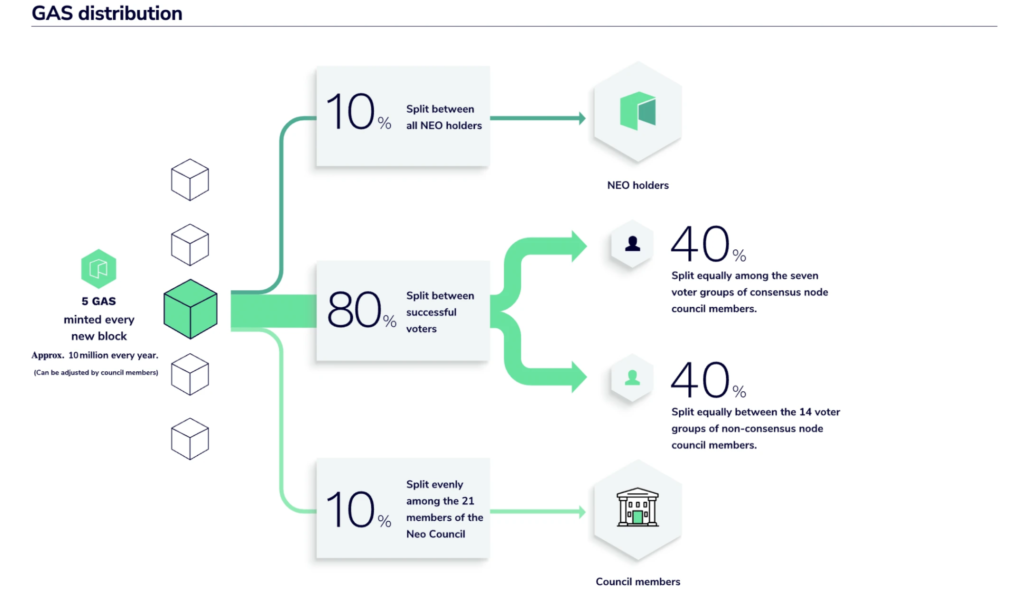
In N3, the economic model has been refined for greater efficiency, predictability, and sustainability. GAS generation is related more closely to the actual network usage, and system fees are optimized to reduce friction for both developers and users. NEO holders benefit from improved GAS distribution mechanisms tied to governance participation.
The introduction of a refined fee structure also makes N3 more cost-competitive compared to other high-performance Layer-1 networks, particularly in the case of applications requiring frequent on-chain interactions.
Governance Enhancements and Community Participation
Governance in Neo N3 has been formalized and made more transparent through on-chain voting and the Neo Council system. NEO holders have every opportunity to actively participate in selecting consensus nodes, influencing economic parameters, and deciding the direction of further network development.
This governance model strikes a balance between decentralization and operational efficiency. It ensures that all strategic decisions are driven by the community while maintaining the performance and reliability required for enterprise-grade applications. Over time, this framework is set to move toward even greater decentralization as the ecosystem matures.
Use Cases and Real-World Applications
Neo N3 aspires to become a universal smart contract platform that can equally support large institutional deployments and consumer-facing decentralized applications alike. To that end, it uses a combination of high throughput, native oracles, digital identity, and multilingual development.
Enterprises can expect N3 to provide predictable performance, built-in compliance tools through DID, and seamless integration with legacy IT systems. In the case of consumer applications, it enables fast, low-cost transactions, rich DeFi functionality, and high-quality user experiences.
Key Sectors Benefiting from N3
Several major industry verticals are particularly well-suited to Neo N3’s capabilities.
- Decentralized Finance (DeFi): N3 supports low-latency trading, lending, asset issuance, and cross-chain liquidity solutions with built-in oracle support for reliable price feeds.
- Digital Identity and Compliance: Native DID makes N3 attractive for KYC-enabled DeFi, credential verification, and government or enterprise identity systems.
- Gaming and NFTs: High throughput and low fees enable real-time gaming economies, dynamic NFT systems, and metaverse applications without performance bottlenecks.
- Supply Chain and Logistics: Integrated oracles enable the trusted transfer and use of real-world data, including shipment tracking, environmental conditions, and certification records.
- Tokenization of Real-World Assets: N3’s regulatory-friendly architecture supports the compliant issuance and management of tokenized securities, commodities, and digital ownership rights.
Conclusion
Neo N3 is one of the most technologically advanced smart-contract platforms in the Web3 ecosystem. It efficiently combines high performance with real-world usability thanks to the integration of native oracles, decentralized identity, and multi-language development support.
Considering the increasing developer adoption, the growing number of DeFi and enterprise deployments, and a fundamental governance model that is constructed for long-term sustainability, Neo N3 is a definitive realization of Neo’s original smart economy vision in a mature Web3 era. These advancements make it one of the most promising blockchain ecosystems currently existing.
***
All metrics displayed on the website, including without limitations value of staked assets, total number of active users, rewards rates, and networks supported, are historical figures and may not represent the actual real-time data.
Share with your network