monad
Monad’s Road to Mainnet
Our deep-dive explores Monad’s testing results, infrastructure research, validator expansion, and community traction ahead of its upcoming mainnet launch.
NOV 18, 2025
Last updated AUG 10, 2026 · V1
Monad is carving out a bold identity as a next-generation, high-performance Layer 1 network. Built to be fully compatible with the Ethereum Virtual Machine (EVM) by Category Labs, it aims to unlock dramatically higher throughput and near-instant finality while preserving the developer ecosystem that Ethereum popularized. With its mainnet launch looming on the horizon, Monad has captured the attention of both builders and institutions seeking a scalable alternative that retains familiar tooling and composability.
In this extensive feature, we take a closer look at the progress the Monad ecosystem has made in anticipation of the mainnet launch.
What Is Monad and What Is Its Mission?
Monad focuses on addressing one of the most well-known challenges in blockchain infrastructure: the scalability trilemma, which deals with the inevitability of trade-offs between decentralization, security, and performance. According to their documentation, Monad is an “Ethereum-compatible Layer 1” that ensures high scalability without compromising on compatibility.
In practical terms, the project sets ambitious targets: a throughput of around 10,000 transactions per second (TPS), block finality measured in seconds (within the sub-second to one-second range), and very low fees with hardware requirements modest enough to encourage decentralized participation.
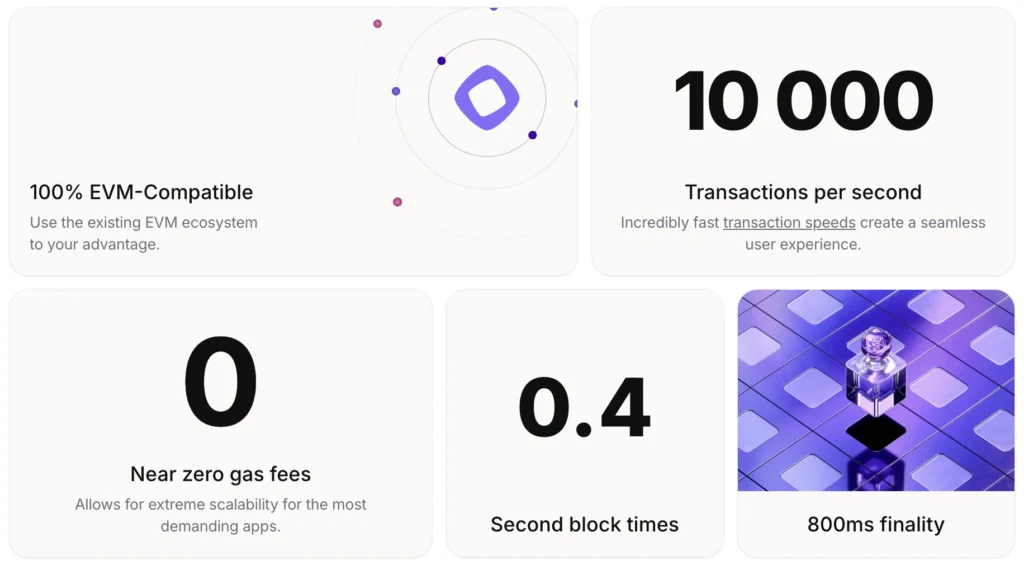
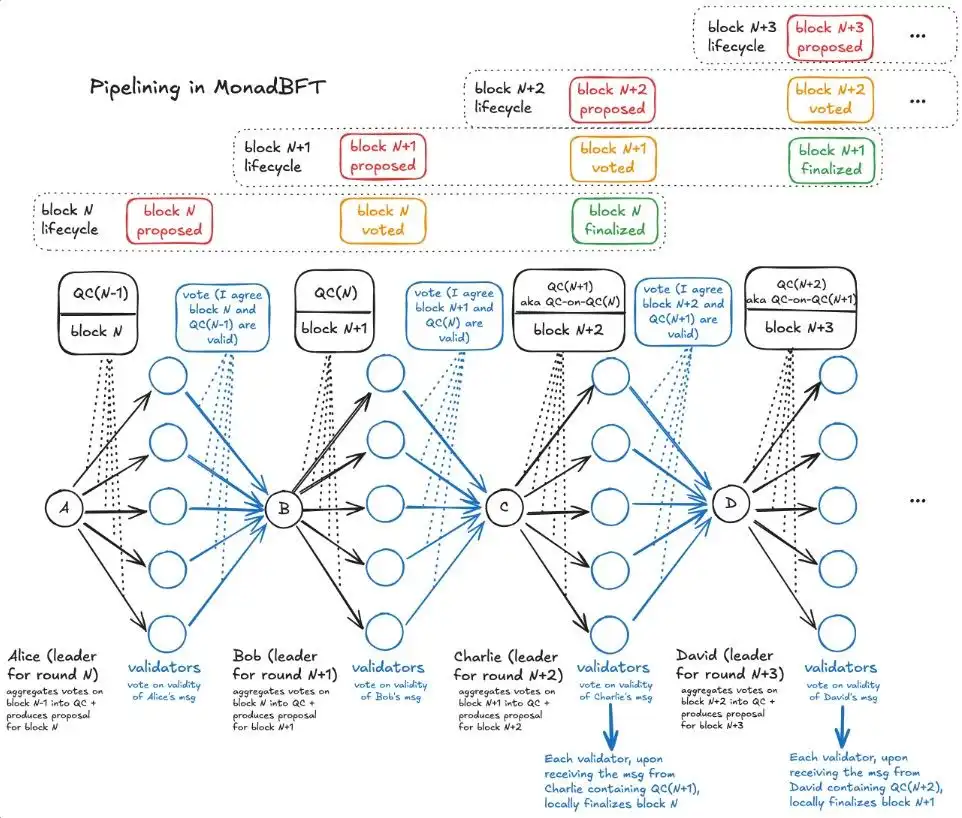
To achieve this, Monad uses a combination of parallel execution (allowing multiple transactions or smart contracts to be processed simultaneously rather than strictly sequentially) and an optimized consensus mechanism (notably a Byzantine Fault-Tolerant protocol based on HotStuff) that is tailored for high throughput and fast finality.
Monad also retains full EVM byte-code compatibility and supports standard Ethereum RPC APIs and tooling. Thanks to this, the existing dApps, smart contracts, and infrastructure built for Ethereum can be ported with minimal friction.
Monad envisions supporting a broad ecosystem of decentralized applications (DeFi, NFTs, and infrastructure services) with institutional-grade infrastructure beneath the hood. Its mission is to become a platform where high-end performance meets developer-friendly design. This, according to Monad, can usher in a new kind of blockchain applications that Ethereum’s throughput constraints might limit today.
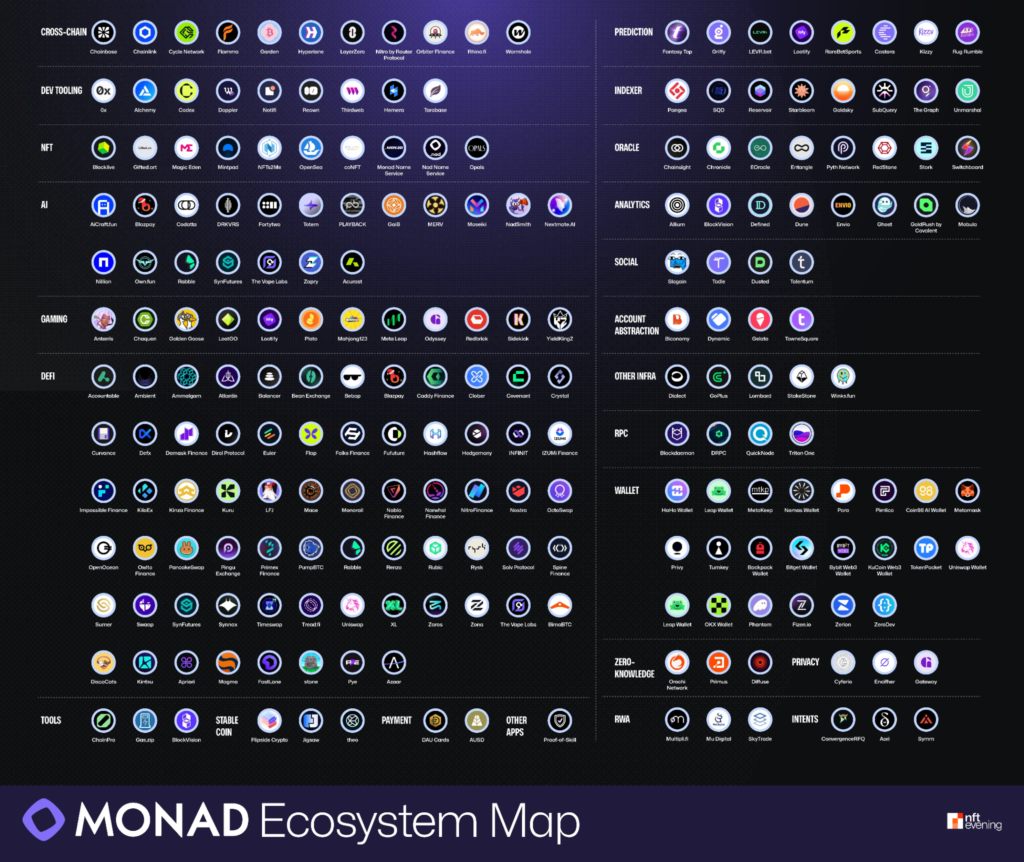
As part of this mission, the launch of Monad’s mainnet is a significant milestone. The exact date has now been confirmed: Monad Mainnet will go live on November 24, 2025.
Monad Testnet: Tracking Steady Growth and Network Maturity
Following its official launch on February 19, 2025, the Monad testnet quickly became a valuable testing facility for the project’s performance aspirations and technical design. In just a few months, it has demonstrated strong growth across all major activity metrics, including transaction throughput, user participation, and validator expansion. It has essentially become one of the most active testnets in the Layer-1 ecosystem.
From the outset, Monad’s testnet was notable for its scale: within its first ten days, it surpassed 130 million transactions, achieved an average block time of 0.5 seconds, and attracted nearly 4 million user accounts.
By March 2025, the testnet had processed over 650 million transactions and reached 72 million active addresses, with more than 10 million blocks. A temporary halt on March 20, caused by a supermajority issue during validator expansion, was used as a practical stress test for Monad’s incident response abilities. The problem was resolved within hours. The validator set successfully increased from 57 to 72.
Momentum continued through April, when daily peak throughput reached 10,000 TPS and total transactions exceeded 1.2 billion. The number of validators and their geographic diversity also grew, spanning 18 countries and 34 cities. The same month brought a major announcement: USDC will go live on Monad mainnet from day one, signaling institutional alignment and early ecosystem readiness.
By May 2025, Monad had processed 1.55 billion transactions and welcomed 99 validators across 19 countries. To further strengthen validator preparedness, the team launched Testnet-2, a dedicated environment for validator-only trials designed to simulate mainnet conditions. Participation reached between 100 and 150 validators.
The network’s maturity became even more apparent by July 2025, when Monad surpassed 2.3 billion total transactions. Integration as a default network on MetaMask, one of the most widely used Web3 wallets, marked a key usability milestone. Around the same time, Monad announced that Asymmetric Research and two additional firms had begun auditing the Monad mainnet, underlining the team’s focus on security and launch readiness.
In August 2025, Monad open-sourced its consensus client, MonadBFT, on GitHub. The testnet’s performance metrics continued to rise, surpassing 2.6 billion total transactions and 34 million blocks produced, while an upgrade reduced block times from 500 milliseconds to 400 milliseconds. With two concurrent testnets (user-facing and validator-focused) and an increasingly global validator base, Monad’s infrastructure testing appears to be approaching its final phase ahead of the highly anticipated mainnet launch.
Table 1. Monad Testnet Progress (February – August 2025)
| Month (2025) | Total Transactions | Total Addresses | NFT Collections / NFTs | Tokens Created | Blocks Produced | Avg. Block Time | Validators | Geographic Reach |
| Feb 2025 | 130.8 M | ~4 M | 45 K / – | 185 K | – | 0.5 s | 57 | 16 countries / 28 cities |
| Mar 2025 | ~650 M | 72 M+ | 291 K / 63 M | 803 K | 10 M | 0.5 s | 72 | – |
| Apr 2025 | 1.2 B | 200 M+ | 479 K / 77 M+ | 1.6 M | 14 M | 0.5 s | 72 | 18 countries / 34 cities |
| May 2025 | 1.55 B | 300 M+ | 637 K / 88 M+ | 2.4 M | 19 M | 0.5 s | 99 | 19 countries / 38 cities |
| Jul 2025 | 2.3 B | 307 M | 841 K / 104 M | 3.6 M | 28.6 M | 0.5 s | 99 | – |
| Aug 2025 | 2.6 B | 310 M | 946 K / 111 M | 4.1 M | 34 M | 0.4 s | 99 (Testnet 1); 186 (Testnet 2) | 31 countries / 57 cities |
Research and Infrastructure Innovations in the Monad Ecosystem
In 2025, several developments occurred in Monad’s ecosystem related to research and development activities. That said, two of them took center stage due to their scale and importance.
MonadBFT: Fast, Responsive, and Fork-Resistant Consensus
In April 2025, the team at Category Labs published a technical white paper titled “MonadBFT: Fast, Responsive, Fork-Resistant Streamlined Consensus” by Mohammad M. Jalalzai and Kushal Babel.
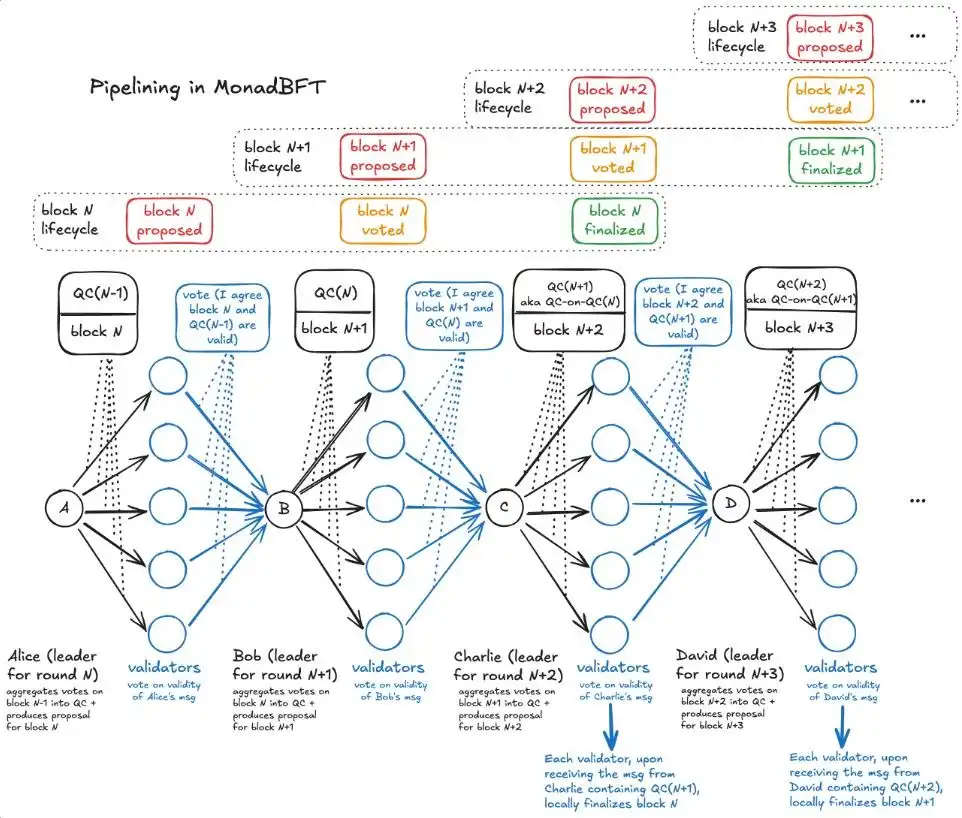
The paper presents a Byzantine Fault Tolerant (BFT) consensus mechanism designed for high performance and scalability while maintaining decentralisation. According to the abstract, MonadBFT achieves “linear message and authenticator complexity on the happy path,” enabling improved decentralization. The mechanism’s key features include the following.
- Speculative finality in a single round: the protocol allows validators to begin execution speculatively with minimal delay, improving throughput and responsiveness.
- Optimistic responsiveness: the protocol makes progress at network speed under favourable conditions without relying on long timeouts, which improves latency.
- Tail-forking resistance: this notion concerns built-in mitigation of a class of MEV (Maximal Extractable Value) vulnerability known as “tail-forking,” where a malicious leader might fork away from its predecessor block and reorder or steal transactions. MonadBFT introduces accountability for equivocations, thus strengthening fairness in the processing of transactions.
RaptorCast: High-Performance Messaging Layer
In May 2025, Category Labs released a blog post titled “RaptorCast: Designing a Messaging Layer,” which outlines the design and rationale for the network messaging protocol underpinning transaction and block propagation in the Monad network.
RaptorCast plays a crucial role in the consensus stack by addressing the latency and bandwidth challenges associated with high-throughput blockchains.
- Transmission protocol choice: the researchers chose to use UDP (User Datagram Protocol) instead of TCP for block propagation, based on the premise that UDP’s lower latency and overhead are more suitable for a high-performance environment, while addressing reliability and authenticity through additional design layers.
- Encoding/erasure-coding system: since UDP is unreliable (it can drop packets), RaptorCast utilizes Raptor codes (a forward-error-correction scheme) to encode block proposals into many small “chunks.” Validators can reconstruct the block as soon as enough chunks are received, without waiting for all packets or retransmissions to arrive.
- Two-layer broadcast tree topology: instead of the leader pushing to all validators (which would impose a large upload burden) or relying purely on a gossip protocol (which adds latency and more hops), RaptorCast uses a structured two-hop broadcast tree: the leader encodes and sends chunks to a first-level validator; that node forwards to a second layer of validators. This strategy reduces worst-case propagation latency and spreads the bandwidth burden.
- Fault-tolerance and decentralization trade-offs: the design ensures that upload bandwidth per validator remains independent of the number of validators, and worst-case propagation time is bounded by twice the worst-case one-way latency in the network.
Together, these innovations demonstrate the Monad team’s holistic approach to the entire stack of networking, execution, and state management. For institutional users and infrastructure deployers, this means the project is building a foundation that may scale not only in transactions per second but in node diversity, latency resilience, and real-world network conditions.
Community Growth and Ecosystem Engagement
Beyond the technology itself, the Monad ecosystem has shown impressive momentum in building a developer-centric community. As the project’s public presence expanded through early 2025, social engagement, developer participation, and global awareness have all surged.
The community’s formal expansion began in January 2025, when the official Monad Developer Community Twitter (X) page launched with a message inviting builders to experiment with Monad’s accelerated EVM. At the same time, Monad’s Discord server grew from approximately 396,000 members at the end of 2024 to 422,000 by the end of January 2025, while Twitter followers rose to 402,000.
The following month marked a turning point: with the testnet launch in February 2025, community activity accelerated dramatically. Discord membership climbed to 540,000, and Twitter followers more than doubled to 838,000. The team also held its first major hackathon, the EVM/Accathon, a two-week event (February 24 – March 12) designed to help developers deploy projects on Monad’s high-speed, parallel-execution EVM. The event drew strong participation and provided valuable feedback for the project’s technical roadmap.
By March 2025, Monad’s Discord surpassed 609,000 members, while the project’s main Twitter account reached 1 million followers, climbing to 1.2 million by month’s end. This surge coincided with an increase in transaction and validator activity on the testnet.
In April 2025, as Monad’s testnet recorded its billionth transaction, community engagement continued to expand at a steady pace. Discord membership grew to 629,000, while Twitter followers reached 1.3 million.
By May 2025, the community had reached a plateau of maturity, with Discord surpassing 639,000 members and Twitter maintaining its 1.3 million-follower milestone. While growth naturally slowed after the initial surge, the ecosystem’s online activity remained among the highest in the Layer-1 space, demonstrating strong and consistent engagement ahead of the anticipated mainnet launch.
Table 2. Monad Community Growth (January – May 2025)
| Month (2025) | Discord Members | Twitter Followers | Notable Community Events |
| Jan 2025 | 422 K | 402 K | Launch of official Monad Developer Community Twitter account |
| Feb 2025 | 540 K | 838 K | Testnet launch; first EVM/Accathon hackathon (Feb 24 – Mar 12) |
| Mar 2025 | 609 K | 1.2 M | Monad reaches 1 M+ Twitter followers; rapid community growth |
| Apr 2025 | 629 K | 1.3 M | Testnet surpasses 1 B transactions; continued developer engagement |
| May 2025 | 639 K | 1.3 M | Stable growth; consolidation of developer community |
The combination of rapid social growth, developer-focused initiatives, and consistent engagement suggests that by the time Monad’s mainnet launches, it will do so with a well-established, globally distributed network of developers, validators, and enthusiasts ready to participate in the ecosystem’s next phase.
As of the time of writing (early November 2025), there were still approximately 1.3 million users on X and around 711,000 on Discord, representing a slight improvement over the previous few months. This, however, suggests that the solid user base was successfully built over those first months of community effort.
Conclusion
As Monad approaches its long-awaited mainnet launch, the project stands at a point of convergence between research, performance, and community momentum. Over the course of several months of testnet evolution, the team has consistently demonstrated efficiency in transparency, technical expertise, and open collaboration.
The groundwork now appears largely complete. Developers have access to a high-throughput, EVM-compatible environment that has been tested at scale and refined through public validator participation. The release of research such as MonadBFT and RaptorCast signals a commitment to advancing blockchain engineering at the protocol level. At the same time, the expanding developer community indicates readiness to deploy on day one.
The forthcoming mainnet represents more than a technical milestone. In this next phase, Monad’s challenge will be to translate its architectural advantages into real-world performance: supporting enterprise-grade use cases, enabling scalable on-chain applications, and offering developers a platform where performance and composability coexist.
***
***
All metrics displayed on the website, including without limitations value of staked assets, total number of active users, rewards rates, and networks supported, are historical figures and may not represent the actual real-time data.
Share with your network