web3 infrastructure
What Institutional Grade Security Really Means in Staking Infrastructure
This article explains how top-tier providers use non-custodial architecture and bare-metal systems to mitigate the risks in their operations.
MAR 10, 2026
Last updated JUL 10, 2026 · V1
TL;DR
For enterprises and institutions, staking may become an exercise in comprehensive risk management.
True institutional-grade staking infrastructure moves beyond standard node operations by combining
- non-custodial architecture (where clients maintain full control of their assets),
- redundant infrastructure (utilizing geographically distributed bare-metal and hybrid cloud systems),
- and relentless auditing (SOC2 Type II, ISO 27001).
Non-Custodial by Design
In institutional finance, control over assets is non-negotiable. Institutional staking must fundamentally decouple the operational duties of validating from the custodial holding of the underlying assets.
The institution retains the private keys and sets the withdrawal addresses. The staking provider only holds the validation keys necessary to perform network duties, ensuring they can never access or move the staked funds.
By strictly separating validator operations from asset custody, institutions can employ their preferred qualified custodians (or self-custody setups) while still leveraging specialized, high-performance infrastructure providers.
Because the provider never takes possession of the assets, the risk of funds being commingled, lent out, or lost due to provider insolvency is completely eliminated.
Infrastructure: The Foundation of Institutional-Grade staking
Performance and security at scale require infrastructure that is both battle-tested and highly redundant. Relying solely on a single cloud provider is a critical vulnerability.
Globally Distributed Bare-Metal
Owning the hardware is paramount. Operating on bare-metal servers prevents hypervisor attacks (where malicious actors target the software layer managing virtual machines) and delivers the maximum computational performance required by high-throughput networks.
Multi-Cloud and Hybrid Architecture
To eliminate single points of failure, top-tier providers use a hybrid approach, diversifying across major cloud providers (AWS, Google Cloud, Azure) and integrating them with privately owned bare-metal servers. The infrastructure remains resilient even if a major cloud provider experiences a catastrophic outage.
Redundancy and Security Measures
- Geographic Redundancy: Nodes are distributed globally to mitigate regional internet outages, natural disasters, and sudden regulatory shifts in specific jurisdictions.
- Automated Failover and Disaster Recovery: Systems are designed to automatically and seamlessly shift validation duties to backup nodes
- in real time, preventing downtime and associated penalties.
- Strict Access Management: Employing Zero Trust architectures, Role-Based Access Control (RBAC), and hardware security modules (HSMs) to ensure only authorized personnel can access critical systems.
- Network Segmentation: Isolating validator nodes from public-facing infrastructure (like sentry nodes) to shield the core voting mechanisms from Distributed Denial of Service (DDoS) attacks.
Audits and Due Diligence
A provider’s claims mean little without independent third-party validation.
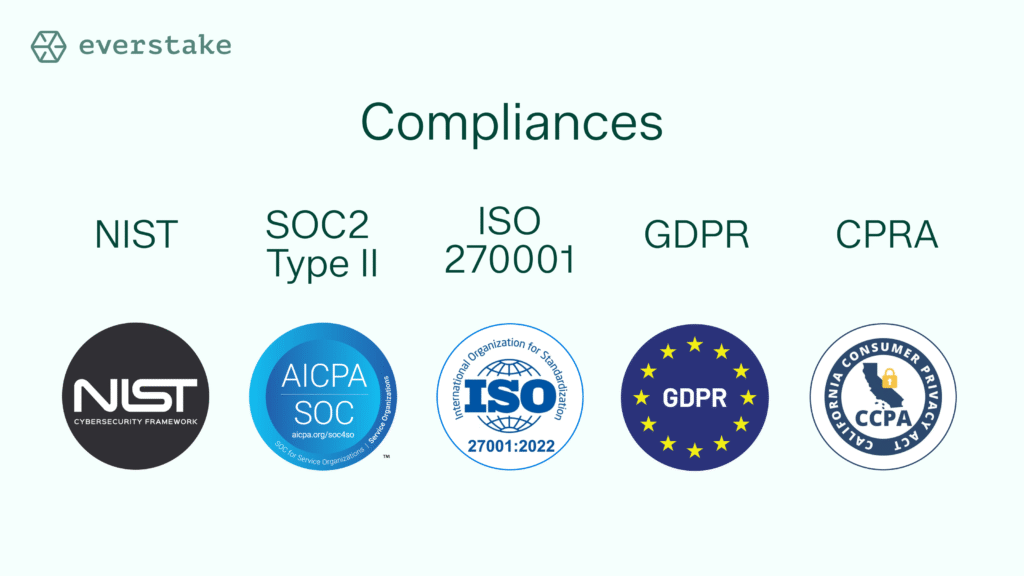
- Audited Security Certifications: Holding certifications such as SOC 2 Type II and ISO 27001 demonstrates that a provider’s security controls, data management, and operational procedures have been rigorously tested over time by accredited auditors. Continuous penetration testing further hardens the perimeter against evolving threats.
- Due Diligence Protocols: Top providers maintain strict internal vetting processes, deeply analyzing their own operational security and conducting extensive vendor risk assessments on any third-party tools they deploy.
- Transparent Operations: Institutions require visibility. Replacing the “black box” of staking with real-time monitoring dashboards, comprehensive reporting, and open communication channels allows institutions to track the exact health and performance of their validators.
Reliability Across the Board
Operational excellence is proven over time and across diverse network environments.
Institutional-grade infrastructure is characterized by maintaining “missed block” rates near zero across numerous distinct PoS networks, while adapting to each network’s unique consensus mechanism.
Social proof is another vital indicator of reliability. Successful, long-term integrations with major custodians, global exchanges, and leading liquid staking protocols demonstrate the ability to securely handle billions in total value locked (TVL).
Slashing Insurance and Protection
Slashing is the primary risk in PoS. Institutional providers employ proprietary anti-slashing mechanisms (such as highly tuned threshold signers and double-signing protection databases). Furthermore, they often provide financial backstops or explicit slashing insurance to make clients whole in the highly unlikely event of an infrastructure-driven slashing incident.
Dedicated Enterprise Support
Institutional staking requires enterprise-grade service agreements, far beyond standard retail support queues.
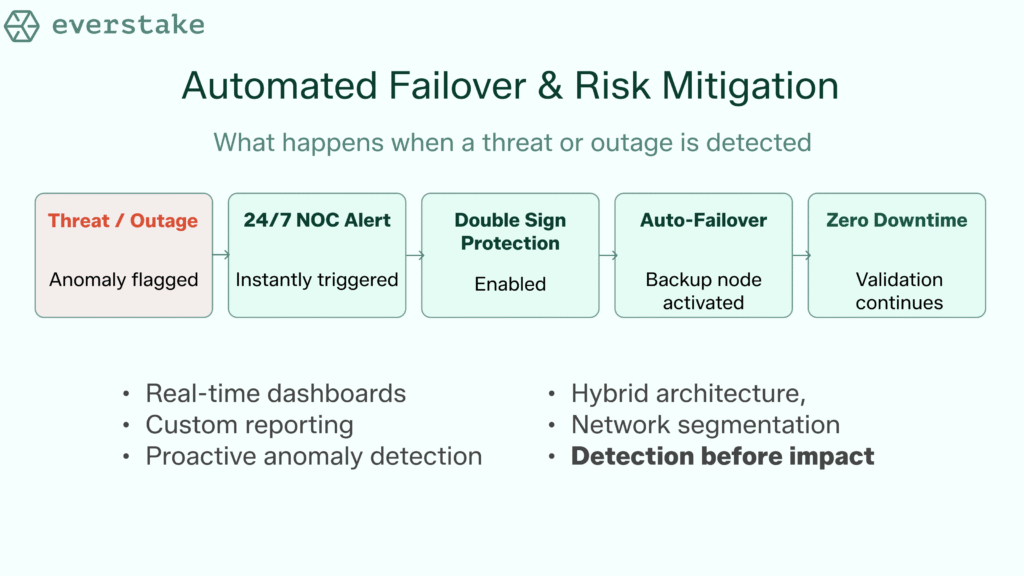
- 24/7/365 NOC Operations: A dedicated Network Operations Center monitoring the infrastructure around the clock to preemptively address anomalies before they impact performance.
- Direct Account Management: Institutions receive direct access to dedicated engineering contacts and account managers who understand their specific technical setups.
- Custom Reporting: Delivering bespoke data feeds and API access tailored for the institution’s tax preparation, regulatory compliance, and internal auditing requirements.
Why Enterprise Organizations Choose Everstake
For enterprise organizations, reliability is the core product when it comes to staking.
Everstake’s deep integration into the crypto ecosystem is evident in our active participation in regulatory discussions (including talks with the SEC), our status as a consistently top-10 validator globally, certifications and partnerships, and our historical track record of securing over 130 networks.
Driven by a deeply technical team and a strict compliance-oriented mindset, Everstake offers a firm commitment to evolving alongside both the regulatory environment and the next generation of blockchain technology.
When institutions partner with Everstake, they secure their assets with an infrastructure built for the decades ahead.
Share with your network